AI Sudoku Book Publishing on KDP: A Complete 2026 Playbook
How to generate, format, and sell AI-built sudoku puzzle books on Amazon KDP in 2026 — niches, difficulty mix, trim size, pricing, and the catalog math behind a $3K/month sudoku catalog.
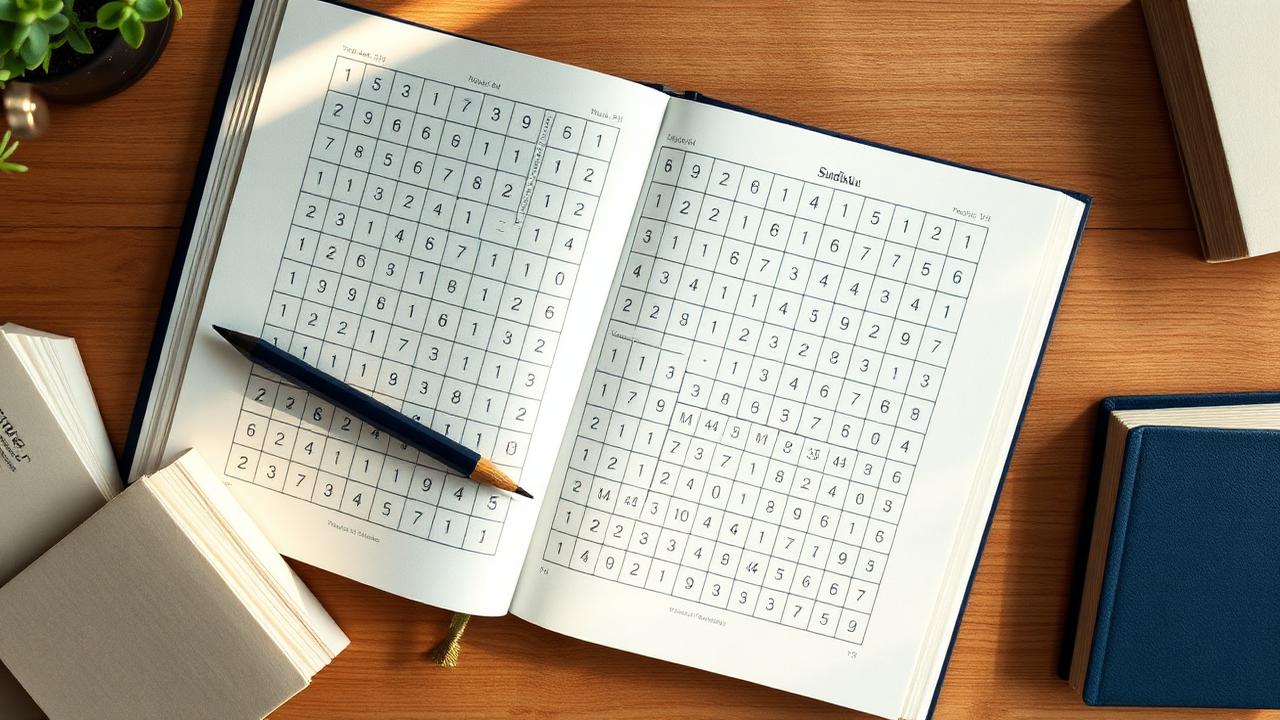
Sudoku books quietly print money on Amazon KDP. Demand is evergreen, competition rewards catalog depth over prose, and modern AI puzzle generators have collapsed production time from weeks to minutes. This is the 2026 playbook for building a real sudoku catalog on KDP — from niche picking to the exact catalog math behind a $3K/month sudoku business.
Why sudoku still wins on KDP in 2026
- Evergreen demand. Sudoku is one of the top three "puzzle" search categories on Amazon year-round.
- Gifting-friendly. Large-print, seniors, and travel editions spike every holiday quarter.
- Low content = fast publishing. No prose to edit, no plot to structure. You're shipping paginated logic puzzles.
- AI closes the last gap. Modern generators produce guaranteed-unique puzzles with graded difficulty in seconds.
Pick a niche — don't publish "sudoku"
The generic "sudoku puzzle book" shelf is saturated. Winning catalogs niche down hard:
- Large print sudoku for seniors — huge audience, forgiving reviewers.
- Travel-size sudoku (5×8) — sold as gifts, low print cost.
- Hard-only sudoku — expert audience, lower competition, higher price tolerance.
- Kids sudoku 4×4 and 6×6 — parents and teachers buy in bulk.
- Themed sudoku — Christmas, road trip, dementia-friendly, mindfulness.
The right difficulty mix per volume
A 200-puzzle book that's all "hard" gets returns. A single-difficulty book targeted at that difficulty converts. If you're doing a mixed book, use the tested 40/30/20/10 split:
- 40% easy · 30% medium · 20% hard · 10% expert
- Group puzzles by section, not shuffled — reviewers hate randomized difficulty.
- Solutions section in the back, indexed by puzzle number.
Trim size, interior, and cover specs
- Standard adult: 8.5×11 trim, one puzzle per page, black & white interior.
- Large print seniors: 8.5×11 trim, one puzzle per page with cell size ≥ 0.55 inch.
- Travel: 5×8 or 6×9, two puzzles per page landscape orientation.
- Cover: big number motifs, high contrast, difficulty prominently on front. Test the thumbnail at 200×300 pixels — if you can't read "LARGE PRINT" or "HARD" at that size, redesign.
Our AI sudoku generator produces the interior in KDP-safe dimensions with bleed and gutter already handled.
Pricing that maximizes royalty per copy
- 120-puzzle 8.5×11 paperback: list at $7.99–$8.99 for ~$2.50 royalty per copy on 60% royalty.
- 200-puzzle large print: list at $9.99, sits in an under-priced shelf.
- Bundle 3 titles into a "collection" edition at $14.99 for higher AOV.
The catalog math behind $3K/month
A single sudoku title averages 1–3 sales per day in a decent niche after 90 days. That's roughly $75–$225/month per title. To clear $3K/month you need 20–40 titles in your catalog, released steadily over 6–12 months. AI generation and one-per-week publishing make that realistic for a solo author working evenings.
KDP metadata that actually converts
- Front-load the title: "Large Print Sudoku for Seniors: 200 Easy to Medium Puzzles with Solutions".
- 7 backend keywords: mix "sudoku puzzle book," "large print puzzles," "brain games seniors," "sudoku easy," "sudoku medium," "gifts for grandma," "activity books adults."
- Two categories: one puzzle category, one gifting category (Books > Humor & Entertainment > Puzzles & Games and Books > Health, Fitness & Dieting > Aging).
What kills sudoku listings
- Duplicated puzzles across your own catalog (Amazon flags it).
- Wrong or missing solutions (instant 1-star pile-on).
- Too-small cell sizes on "large print" editions.
- Generic AI-looking covers with no difficulty label.
Bottom line
Sudoku on KDP rewards operators, not artists. Pick a niche, use a trusted generator, ship one book a week, and let the catalog compound. The math works — but only if every book you publish is production-quality. Try the AI sudoku generator for your next title, and pair it with a proper large-print cover to give yourself the best shot at the algorithm.
Ready to put this into practice?
Start writing your KDP-ready book with AI — free, no credit card.
Start writing free